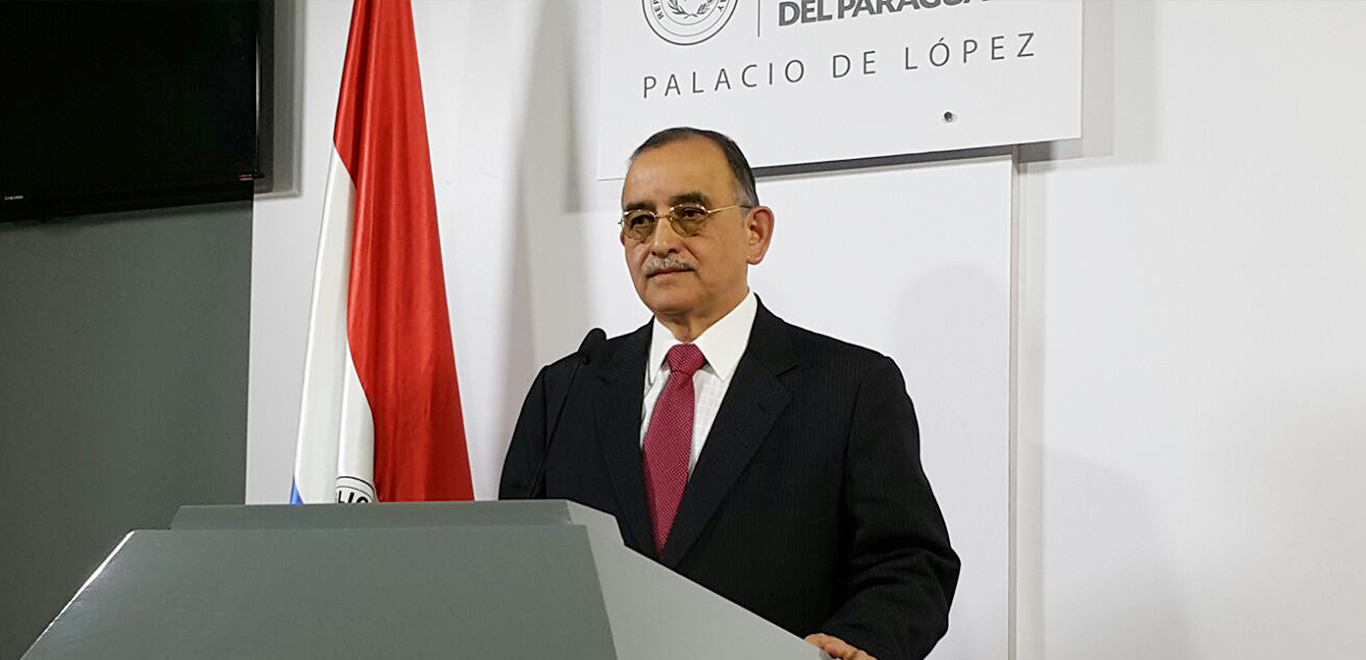
Leading Edge in conversation with Ángel Recalde, Magaging Director of Yacyretá hydroelectric power station, built over the waterfalls of Yacyretá-Apipé in the Paraná River, between Corrientes in Argentina and Ayola in Paraguay
Interview
Leading Edge (LE): How significant is Yacyretá for the country in terms of energy?
Ángel Recalde (AR): Paraguay is a country that is known as a world producer of electric power, and the largest exporter of electricity. Yacyretá is a centre with 3100 megawatts of capacity, with 20 Kaplan turbine machines, the first of which began producing in September 1994. The installation was completed in 1996 when all 20 machines began operating. We have an average annual production of 20,000 gigawatts / hour, which makes us a major producer, and a major contributor to the economy of both countries.
LE: What are your most important priorities on the table today?
AR: The technical issue. We need to make machines that are reliable and have a longer service life than they have at the moment. But another priority is the unfortunate situation of the debt we have with the Argentine government, which the governments of both Paraguay and Argentina are committed to resolving. We are working with the foreign ministers, the secretary general of Paraguay’s presidency, and his Argentinian counterpart, and attending negotiations so that an agreement can be reached which will enable Yacyretá’s debt to be reduced and paid at its current rate. We have to think of Yacyretá as viable from not only a technical but also a financial perspective. Other negotiations are related to social and environmental aspects.
LE: Where are the most recent investments made by Yacyretá? And where will the next ones be?
AR: At the moment we are in the process of restoring the machines. We also have plans to increase the number of machines in the plant from 20 to 23. The plan has been in the pipeline for some time, but now we have a new impulse, with the construction of the Aña Cuá plant, on a branch of the river. We still have major infrastructure investments in the affected area. In Encarnación we still have work to do, we will soon be constructing a ring road around the city, and in response to government initiatives for social commitment and the Senavitat agreement, we are building houses, which will help the government’s policies for reducing poverty. Unfortunately, water resources are not infinite. But we are lucky enough to have the Paraná River, which is ideal for hydroelectric development.
LE: What does Yacyretá represent for Paraguay?
AR: Apart from generating electricity, we have a social responsibility in the area, as we had to relocate some 7,000 families to groups of housing, and our responsibility to them is ongoing. Our almost 160,000-hectare reservoir has had an impact to the environment. Our environmental programme is not only compensation, we are completely and totally immersed in the project; we have signed agreements with the SEAM (Environment Secretary), and authorities and municipalities in the affected area, and we are working on improving the quality of water reaching the reservoir.
LE: What are the implications of Yacyretá on the Argentine market?
AR: Argentina as a country has a much higher demand for electricity and energy than Paraguay. Paraguay’s needs are mostly covered by Itaipu, but Argentina is currently only taking half of their corresponding production, and much of the Paraguayan energy is transferred to Argentina for its use. Paraguay uses up to 25% of its power at any given time, and around 13% of its energy.
LE: What Paraguay would you like to be projected to the world?
AR:I would like to see a more developed country. We have the appeal of available energy and low taxes to encourage investment, but we have to be better prepared.